The business context
Insurance claims can contain several kinds of evidence: a claimant’s account, policy information, supporting documents and relationships to previous activity. Reviewing each element separately can make it difficult to understand why a claim deserves closer attention.
Investigators also need an explanation they can examine. A risk indicator becomes useful when it helps them decide what to verify next.
The project
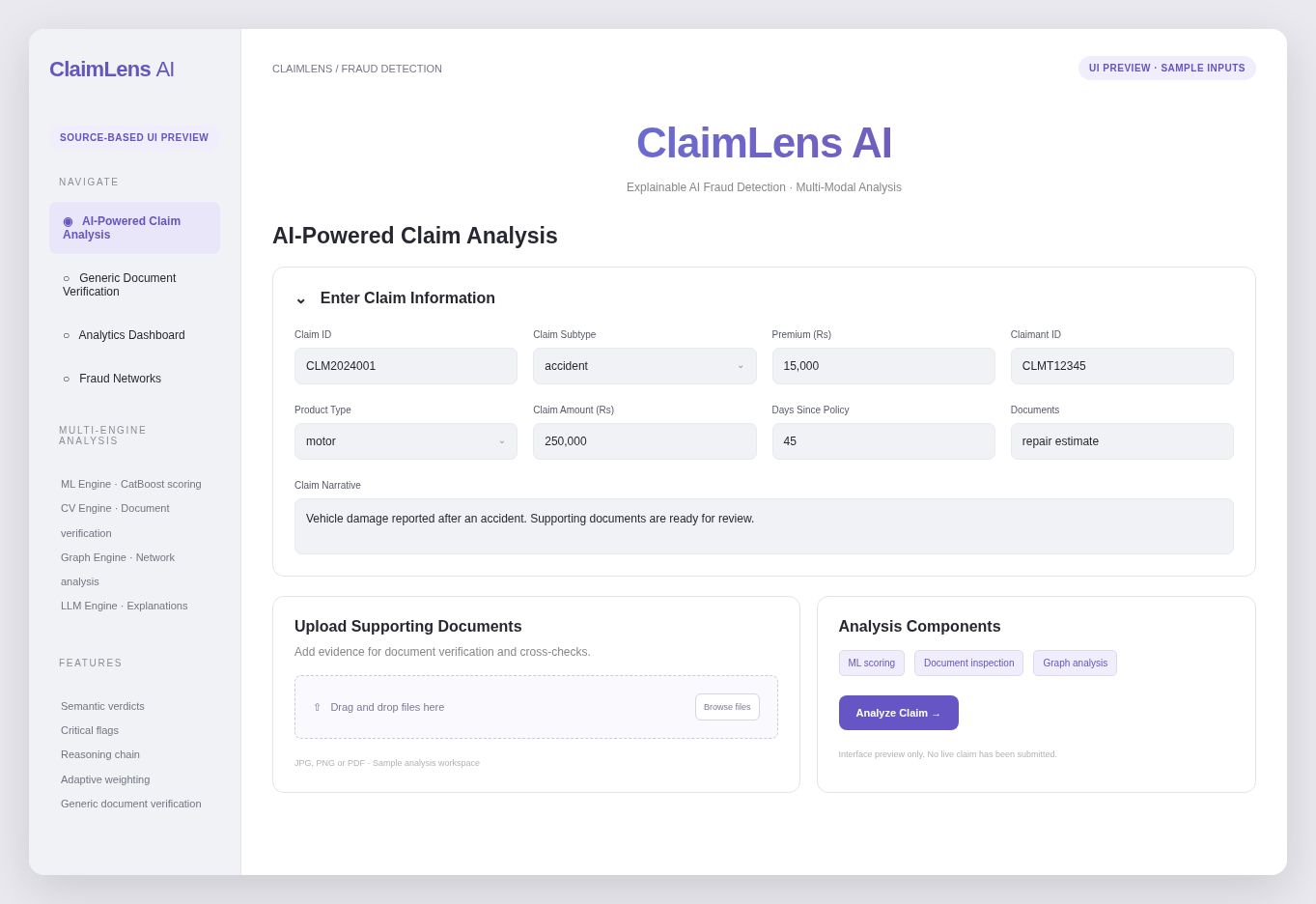
ClaimLens brings claim assessment, document inspection, relationship-based analysis and explanatory output into a shared review workflow.
The project explores how different forms of evidence can support an investigator’s understanding of a claim. Its focus includes surfacing concerns and presenting them in a form that supports follow-up investigation.
An illustrative scenario
A motor claim appears routine when viewed through its narrative alone. Supporting documents or related activity may raise questions that warrant further examination.
ClaimLens is designed to help a reviewer bring those observations together and identify the evidence requiring additional verification. A flagged claim remains a matter for investigation and professional judgment.
What a pilot could evaluate
A pilot could assess the relevance of flagged cases, the clarity of explanations, document-quality limitations and the time reviewers need to assemble a case assessment.
Who it is relevant to
Insurance operations teams, claims investigators, fraud-review functions and businesses exploring AI-assisted evidence review.
Private walkthrough
Examine a representative claim-review journey and discuss which evidence sources are available within your organization.
Discuss your claims-review workflow →